ITDR vs. ISPM vs. IGA: End the Acronym Confusion Once and For All
ITDR, ISPM, and IGA are not the same thing - and buying the wrong one first is an expensive mistake. Here's the honest breakdown every CISO needs in 2026.
8 min read · Last updated August 2026
Three acronyms. Dozens of vendors. One very expensive category map to get wrong.
If you've sat through a vendor pitch in the last 18 months, you've heard ITDR, ISPM, and IGA used almost interchangeably - sometimes in the same slide. They're not the same. They answer different questions, operate at different points in the attack timeline, and failing to sequence them correctly is one of the most common (and costly) mistakes security teams make in 2026.
This post cuts through the noise. No hype, no vendor positioning - just a clear definition of each category, where it sits in the identity-security stack, and a practical guide to figuring out which one you actually need first.
The Stakes: Why Getting This Right Matters Now
Compromised credentials were the leading initial access vector in 2025, appearing in 22% of confirmed breaches according to Verizon's Data Breach Investigations Report. That's not a new trend - it's an accelerating one. Recorded Future identified 50% more credentials in the second half of 2025 than in the first half of the year. Meanwhile, identity weaknesses played a material role in almost 90% of incident response investigations in 2025.
The market has responded with a flood of new categories. But more categories don't automatically mean better coverage - they mean more decisions to make, more budgets to justify, and more integration work to do. Getting the sequencing wrong means you're paying for detection tools that have nothing solid to detect against, or posture tools that can't fix what was never governed in the first place.
The Three Categories, Defined Clearly
IGA - Identity Governance & Administration: The Foundation
IGA is the oldest of the three and, in 2026, still the most foundational. It answers one question: Who has access to what, and should they?
IGA manages the full identity lifecycle - onboarding, role changes, offboarding - and governs entitlements through access reviews, Separation of Duties (SoD) policies, and certification campaigns. It's the system of record for access. It's what tells you that a contractor who left six months ago still has write access to your production database.
Without IGA, you don't have a governed access state to protect or monitor. You have a fog.
ISPM - Identity Security Posture Management: The Prevention Layer
ISPM is a continuous, preventive discipline. It answers: What identity risks exist right now, before an attacker exploits them?
ISPM focuses on continuously evaluating identities, understanding their risk, and ensuring that access remains appropriate at all times. In practice, that means discovering misconfigured accounts, excessive standing privileges, toxic permission combinations, and configuration drift - before they become breach headlines. ISPM replaces periodic audits with continuous assessment.
Think of ISPM as the hygiene layer. It operates before an attack, shrinking the attack surface so there's less for an adversary to exploit.
ITDR - Identity Threat Detection & Response: The Runtime Layer
ITDR operates at runtime. It answers: Is an identity being abused right now?
ITDR encompasses security practices and technologies dedicated to detecting, investigating, and responding to threats that target digital identities - including compromised credentials, privilege escalation, and unauthorized access. When a credential is stolen and used at 2 a.m. from an unusual location, ITDR is what fires the alert. It monitors behavioral patterns, detects anomalies, and triggers automated responses - locking accounts, enforcing MFA, or isolating sessions.
According to Gartner's framework, true ITDR must deliver runtime detection and response capabilities, not just posture assessment and access controls. That distinction matters: a lot of tools marketed as ITDR are really just posture tools with a detection badge.
The Attack Timeline: Before, During, After
The clearest way to understand how these three categories relate is to map them to the attack timeline.
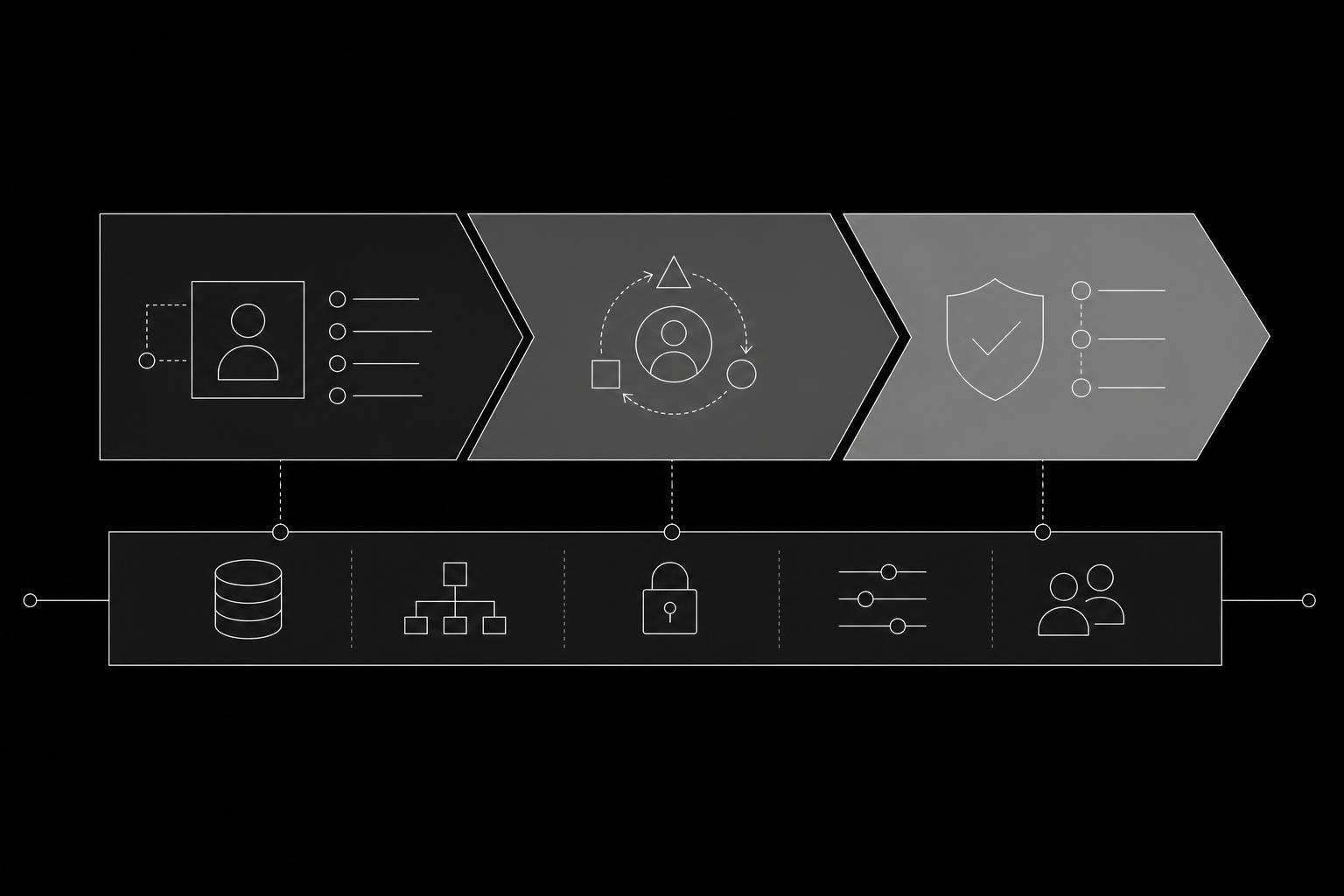
| Dimension | IGA | ISPM | ITDR |
|---|---|---|---|
| Core question | Who has access to what, and should they? | What identity risks exist before an attack? | Is an identity being abused right now? |
| Attack timeline position | Foundation (always-on) | Before — preventive | During / After — reactive |
| Primary function | Lifecycle management, access reviews, SoD, entitlement governance | Continuous posture assessment, misconfiguration detection, privilege hygiene | Behavioral anomaly detection, credential misuse alerting, automated response |
| Example capabilities | Provisioning/deprovisioning, access certifications, role management, orphaned account cleanup | Standing privilege discovery, configuration drift monitoring, toxic combination detection, NHI inventory | Impossible travel detection, lateral movement alerts, session isolation, MFA enforcement triggers |
| Example vendors (2026) | Iden, SailPoint, Saviynt, One Identity | Silverfort, Authomize, Veza (now ServiceNow) | CrowdStrike Falcon Identity, Microsoft Defender for Identity, Vectra AI |
| Primary owner | IT / IAM team | IAM + Security Architecture | SOC / Security Operations |
| Data dependency | HRIS, directories, app connectors | IGA data + cloud config + directory telemetry | IGA data + SIEM + behavioral baselines |
Why IGA Is the Foundation - Not Just Another Layer
Here's the argument that gets lost in vendor marketing: ISPM and ITDR are only as good as the governance data underneath them.
ISPM needs to know what "normal" access looks like to flag what's excessive. That baseline comes from IGA. ITDR needs to know whether the account triggering an alert is a legitimate service account or an orphaned credential that should have been deprovisioned eight months ago. That context comes from IGA.
You can't detect or fix what you never governed. An ITDR tool firing alerts against an ungoverned identity estate is like a smoke detector in a building with no fire exits - the alarm goes off, but you don't know which door to run to.
This is why the Gartner "identity resilience" framing matters: resilience requires a governed foundation. Detection and posture tools amplify governance; they don't replace it.
The sequencing trap: Many teams buy ITDR first because it's the most visible category — it shows up in SOC conversations and breach post-mortems. But ITDR without IGA produces noisy, context-free alerts. You'll spend more time triaging false positives than stopping real threats. Governance first, detection second.
2026 Market Consolidation: What It Means for Buyers
The M&A activity of the past 12 months has been a direct bet on convergence. In July 2025, Palo Alto Networks announced a $25 billion agreement to acquire CyberArk, the third-largest cybersecurity merger in history according to Forrester. Shortly after, ServiceNow announced plans to acquire Veza for approximately $1 billion, marking its first serious entry into the IAM and IGA market.
Both deals share the same thesis: identity, posture, and detection are converging into unified platforms. In both instances, the acquiring companies said the deals would help them secure and enable agentic AI.
That's a reasonable long-term direction. But as one analyst noted, vendor consolidation may simplify policy alignment and improve visibility, but many organizations still struggle with fragmented enforcement, inconsistent governance models, and silos across identity, cloud, and security teams.
The practical implication: platform consolidation narratives are compelling, but they don't eliminate the need to sequence your investments correctly. A unified platform built on weak governance is still weak governance - just with a better dashboard.
For mid-market teams in particular, the consolidation wave creates a risk: being sold a "complete identity platform" that's actually ISPM and ITDR bolted onto a thin governance layer. Check the governance depth before you buy the platform story.
Which Do You Need First? A Practical Guide
The honest answer depends on where you are in your identity maturity journey. Use this decision tree to orient yourself.
The short version:
- Start with IGA if you can't answer "who has access to what" with confidence, if offboarding is still manual, or if you have ungoverned SaaS apps in your stack. This is the majority of mid-market companies in 2026.
- Layer in ISPM once you have a governed access baseline. ISPM makes that baseline continuous and risk-scored rather than point-in-time.
- Add ITDR when you have enough governance context to make behavioral alerts actionable. Without that context, ITDR is expensive noise.
The good news: these categories aren't mutually exclusive, and you don't have to build them sequentially over years. Modern IGA platforms - especially those built for lean teams - can deliver governance coverage fast enough that ISPM and ITDR become meaningful additions within months, not years.
The Non-Human Identity Wrinkle
One more variable that reshapes this entire map: non-human identities. Service accounts, API keys, OAuth tokens, SSH keys, RPA bots, cloud workload credentials, and AI agents now represent the fastest-growing, least-governed attack surface in the modern enterprise. And machine identities outnumber human identities 45:1, creating massive operational risk due to their higher privileges, less governance, and reduced visibility compared to human accounts.
NHIs break the traditional IGA model because most legacy governance tools were built for human users. They also break ITDR because behavioral baselines for service accounts are harder to establish than for humans. And they make ISPM more complex because NHI configurations drift faster and are harder to inventory.
This is why governance coverage - including NHIs - has to come first. You can't detect anomalous behavior from a service account you didn't know existed. For a deeper look at the NHI challenge, see our post on The NHI Explosion: Why Non-Human Identities Are the Identity Blind Spot of 2026.
The Bottom Line
ITDR, ISPM, and IGA are complementary - but they're not interchangeable, and they're not equally urgent for every organization.
IGA is the foundation. It's the system that tells you what access exists, whether it's appropriate, and what should be cleaned up. Without it, ISPM has no baseline to assess against, and ITDR has no context to make alerts actionable.
ISPM is the prevention layer. It takes your governed access state and makes it continuous, risk-scored, and hygiene-driven - shrinking the attack surface before adversaries find it.
ITDR is the runtime layer. It watches for active exploitation of identities and responds in real time - but only effectively when it has governance context underneath it.
The 2026 consolidation wave is pushing these categories together at the platform level. That's directionally right. But the sequencing logic doesn't change: governance first, posture second, detection third.
If your governance foundation is incomplete - ungoverned apps, manual offboarding, orphaned accounts, NHIs flying under the radar - that's where to start. Everything else builds on top of it.
Related reading
Secrets Management vs. NHI Governance: Where Vaults Stop and Identity Begins
A vault secures the secret - it doesn't govern the identity holding it. Here's the gap between secrets management and NHI governance, and why you need both layers in 2026.
Honest Guide to Okta Alternatives for Identity Governance
Okta is best-in-class SSO. But when governance depth, non-SCIM coverage, or cost at scale become the problem, here's an honest look at what to consider instead.
The Honest IAM Buyer's Guide: Best Tools by Category in 2026
A trade-off-first guide to IAM tools in 2026 - SSO, IGA, PAM, CIAM, and directories explained, with honest best-fit profiles for Okta, Entra ID, SailPoint, CyberArk, Lumos, Iden, and more.