What Is ISPM? The "Before the Breach" Half of Identity Security
ISPM continuously discovers and assesses identity risk - standing privilege, dormant accounts, MFA gaps, shadow admins, and unmanaged NHIs - before attackers exploit them. Here's what it measures and how it fits the stack.
8 min read · Last updated August 2026
Most identity breaches don't start with a zero-day. They start with an account nobody remembered to deprovision, a service account carrying admin rights it earned two years ago, or an OAuth token that outlived the integration it was created for. The attacker didn't break in - they walked through a door that was already open.
That's the problem Identity Security Posture Management (ISPM) is built to close.
The One-Sentence Definition
ISPM is a cybersecurity discipline focused on continuously assessing and managing identity risks across an organization's IT infrastructure - identifying misconfigurations, over-provisioned accounts, and access-related security gaps before they can be exploited.
The word continuously is doing real work in that sentence. Traditional identity governance operates in cycles: quarterly access reviews, annual certifications, joiner-mover-leaver workflows triggered by HR events. ISPM doesn't wait for the next campaign. It watches the posture in real time and surfaces drift the moment it appears.
Where ISPM Sits: Gartner's Identity-Resilience Model
Gartner frames identity security around a two-sided model called identity resilience. The logic mirrors what endpoint security has done for years:
| Dimension | ISPM | ITDR |
|---|---|---|
| Primary job | Harden posture before an attack | Detect and respond during/after an attack |
| Timing | Continuous, preventive | Real-time, reactive |
| Question answered | Where are we exposed? | Is something happening right now? |
| Analogy | Locking the doors and windows | Alarm system + security response |
| Gartner pillar | Prevention | Detection & Response |
Gartner's identity-resilience framework positions ISPM as the preventive half - hardening posture before the attack - and ITDR as the detection-and-response half for when something gets through. Both sides are required. Prevention alone assumes perfect controls. Detection alone assumes you can catch every attacker in motion. Neither assumption holds.
In 2025, 90% of incident response engagements involved identity weaknesses, and 65% of initial access was identity-driven, according to Unit 42's Global Incident Response Report 2026. The attack surface is identity. The question is whether you're hardening it before the breach or scrambling after.
What ISPM Actually Measures
ISPM surfaces six categories of identity risk that periodic reviews routinely miss:
1. Standing and excessive privilege Accounts accumulate permissions over time - a mover event adds access, but the old access rarely gets removed. ISPM continuously re-discovers and re-scores to detect new exposures early, alerting on posture regressions like privilege creep after repeated mover events. The goal is least-privilege in practice, not just in policy.
2. Dormant and orphaned accounts Inactive or abandoned accounts remain open doors for attackers; ISPM detects and flags orphaned accounts before they can be abused. These are the accounts where the creator left the company but the credentials - and their full access - stayed behind.
3. MFA gaps Not every account in your directory has MFA enforced. ISPM maps authentication coverage across the estate and flags accounts - especially privileged ones - where MFA is absent, bypassed, or misconfigured.
4. Shadow admins Shadow admins are accounts that hold effective admin-level rights through indirect role assignments or group memberships, without appearing in the "Administrators" list. They're invisible to most governance tools and are a favorite lateral-movement path.
5. Identity misconfigurations Common misconfigurations include over-privileging accounts, improper identity lifecycle management, and failing to implement MFA correctly - the exact classes Gartner called out as generating the highest-impact identity breaches.
6. Unmanaged non-human identities (NHIs) This is the category growing fastest and governed least. Service accounts, API keys, OAuth tokens, automation credentials, and AI agents - none of them can enroll in MFA, none of them show up in an HR offboarding flow, and most of them carry permissions that would trigger an immediate review if a human account held them.
The NHI Problem Is the ISPM Problem
The scale of non-human identity sprawl in 2026 makes the governance gap concrete.
Machine identities now outnumber human identities by 109 to 1, according to Palo Alto Networks' 2026 Identity Security Landscape report - up from 82 to 1 just one year earlier, a 32.9% jump in the ratio itself. In cloud-native environments, that ratio climbs higher still.
Of those machine identities, 97% carry excessive privileges, and just 0.01% control 80% of cloud resources. The concentration of risk is extraordinary.
47% of NHIs are more than one year old with no credential rotation, and two thirds of enterprises have suffered a breach via a compromised NHI.
The governance gap isn't a mystery. Service accounts are still created with static credentials, granted sweeping permissions, and then left unmanaged - operating outside traditional IAM controls. A human-centric posture program misses all of it.
This is why ISPM's scope must extend to non-human identities. An ISPM tool that only covers user accounts in your IdP is covering perhaps 1% of your actual identity estate.
For a deeper look at the NHI explosion and what it means for governance, see our post on The NHI Explosion: Why Non-Human Identities Are the Identity Blind Spot of 2026.
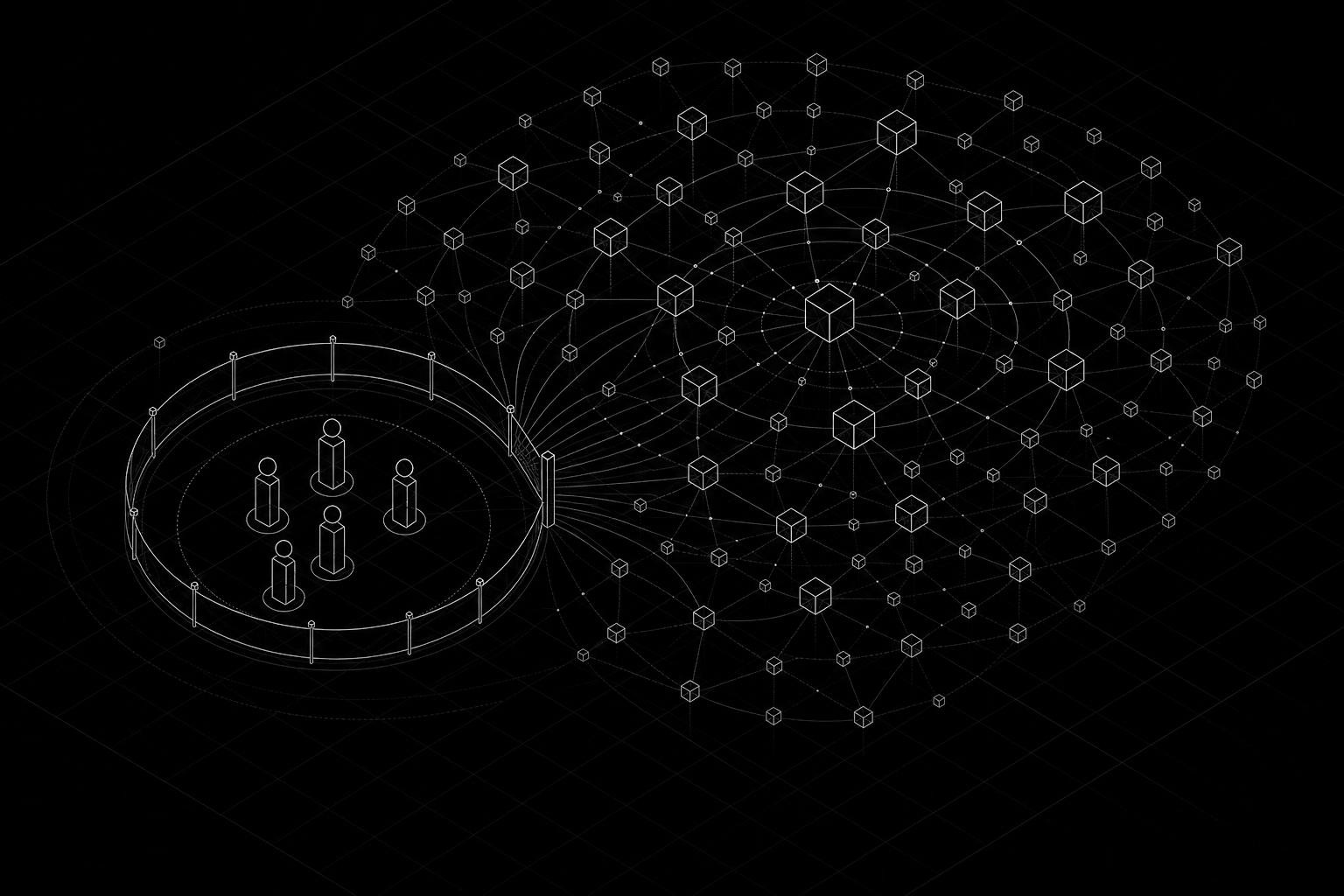
ISPM vs. IGA: Complementary, Not Competing
This is where the category confusion is most common. ISPM and IGA are not the same thing, and neither replaces the other.
IGA (Identity Governance and Administration) governs access lifecycle and compliance through provisioning, access requests, and certifications - typically event- and campaign-driven: joiner/mover/leaver flows, quarterly access reviews, and policy approvals.
ISPM is continuous. It detects posture drift between campaigns - like privilege creep after repeated mover events, or a new toxic permission combination created by a SaaS admin at 11pm on a Friday.
The cleanest way to frame the relationship:
IGA answers: Who has access to what, and was it approved? ISPM answers: Does that access create security exposure right now?
ISPM does not replace IAM or IGA - it strengthens them by continuously measuring posture, spotting drift between reviews, and focusing teams on the highest-risk access.
In practice, ISPM finds the risk. IGA enforces the fix and manages the lifecycle. ISPM without IGA gives you a dashboard of problems with no remediation path. IGA without ISPM gives you a governance program that's blind between campaigns.
The combination is what closes the loop: continuous posture assessment feeding risk-prioritized remediation through governed workflows.
Iden's agentic IGA platform connects to your full stack — SCIM and non-SCIM apps alike — and automates the remediation that ISPM findings demand. See it in action.
See How Iden Closes the Governance LoopThe Coverage Problem Nobody Talks About
ISPM is only as good as its visibility. And visibility has a hard constraint: most ISPM tools only see what's connected to them.
If your ISPM tool discovers risk in your Okta-managed apps but misses the 40 SaaS tools your teams provisioned directly - Notion, Figma, Linear, GitHub, Slack workspaces - it's producing a partial picture. Partial pictures create false confidence.
The same applies to non-human identities. Two in five SaaS platforms fail to distinguish non-human identities from human users, which means an ISPM tool relying on those platforms' native data will inherit the same blind spot.
Full-stack ISPM requires:
- Universal app coverage - including apps without SCIM or APIs
- NHI discovery - service accounts, OAuth tokens, API keys, AI agents
- Fine-grained entitlement visibility - not just "has access to Slack" but which channels, which permissions, which integrations
- Continuous posture scoring - not a quarterly snapshot
This is exactly where the governance layer matters. An IGA platform with universal connectivity doesn't just enforce access - it provides the authoritative inventory that ISPM needs to assess posture accurately.
ISPM in the Broader Identity-Security Stack
ISPM doesn't operate in isolation. Here's how it fits with the other categories CISOs are mapping in 2026:
The stack is complementary, not redundant. Each layer has a primary job:
- IGA - lifecycle automation, access certification, compliance workflows
- ISPM - continuous posture assessment, risk scoring, drift detection
- ITDR - real-time threat detection and response for active attacks
- PAM - privileged session control and just-in-time access for high-risk accounts
- CIEM - cloud entitlement management for IaaS/PaaS environments
The governance layer (IGA) is the foundation. It's the system of record for who should have what. ISPM verifies whether reality matches that record - continuously, across the full stack.
Your ISPM Starter Checklist
Before you evaluate tools or expand your program, get clear on what you're actually measuring. Use this checklist to assess your current posture coverage.
What Good ISPM Coverage Looks Like in 2026
The bar has moved. A year ago, "we have quarterly access reviews" was a defensible answer. In 2026, with NHIs outnumbering humans by triple-digit ratios and AI agents proliferating across every SaaS stack, it isn't.
Good ISPM coverage in 2026 means:
- Continuous, not periodic - posture is assessed in real time, not at campaign time
- Universal, not partial - every app, including the ones without SCIM or APIs
- Human and non-human - service accounts, OAuth tokens, and AI agents are first-class citizens in your identity inventory
- Risk-prioritized - findings are scored and surfaced by exploitability, not alphabetically
- Remediation-connected - a finding without a governed fix path is just a report
The governance layer is what makes remediation possible at scale. ISPM tells you where the risk is. IGA - with full-stack coverage and fine-grained control - is what actually closes it.
For a practical guide to the evidence your auditors will ask for once you've hardened your posture, see The Identity Evidence Playbook.
Frequently Asked Questions
Is ISPM a product category or a framework?
Both, increasingly. Gartner treats ISPM as a distinct security discipline — a framework of continuous assessment covering misconfigurations, excessive privilege, dormant accounts, and MFA gaps. Many vendors now embed ISPM capabilities into IGA, PAM, and ITDR platforms rather than selling it as a standalone product. What matters is whether the capability is actually continuous and covers your full identity estate, not what the vendor calls it.
How is ISPM different from a traditional access review?
Access reviews are periodic and campaign-driven — typically quarterly or annual. ISPM is continuous. It detects posture drift between campaigns: privilege creep after a mover event, a new shadow admin created by a SaaS admin, an MFA gap that appeared when a new app was provisioned. By the time your next quarterly review runs, ISPM has already flagged and (ideally) remediated the issue.
Do I need a separate ISPM tool, or does my IGA platform cover it?
It depends on your IGA platform's architecture. Legacy IGA tools are campaign-driven and don't provide continuous posture assessment. Modern IGA platforms — especially those with AI-native, always-on discovery — can deliver ISPM capabilities as part of the governance layer. The key questions: Does it cover non-SCIM apps? Does it govern NHIs? Does it score risk continuously, not just at review time?
What's the relationship between ISPM and ITDR?
ISPM and ITDR are complementary halves of Gartner's identity-resilience model. ISPM is preventive: it hardens your posture before an attack by eliminating excessive access, dormant accounts, and misconfigurations. ITDR is reactive: it detects and responds to active identity-based attacks in real time. ISPM reduces the blast radius by eliminating unnecessary access; ITDR catches the threats that make it past preventive controls. You need both.
Why do non-human identities matter for ISPM?
Because NHIs now outnumber human identities by ratios of 45:1 to 144:1 depending on environment, and the vast majority sit outside traditional governance programs. They can't enroll in MFA, they don't appear in HR offboarding flows, and they often carry privileged access with no defined owner or rotation schedule. An ISPM program that only covers human accounts is assessing a small fraction of the actual identity attack surface.
Related reading
Secrets Management vs. NHI Governance: Where Vaults Stop and Identity Begins
A vault secures the secret - it doesn't govern the identity holding it. Here's the gap between secrets management and NHI governance, and why you need both layers in 2026.
Honest Guide to Okta Alternatives for Identity Governance
Okta is best-in-class SSO. But when governance depth, non-SCIM coverage, or cost at scale become the problem, here's an honest look at what to consider instead.
The Honest IAM Buyer's Guide: Best Tools by Category in 2026
A trade-off-first guide to IAM tools in 2026 - SSO, IGA, PAM, CIAM, and directories explained, with honest best-fit profiles for Okta, Entra ID, SailPoint, CyberArk, Lumos, Iden, and more.