HIPAA 2026 Identity Controls: What the Proposed Rule Makes Mandatory and How to Get Ready
The proposed HIPAA Security Rule overhaul eliminates the "addressable" loophole and makes MFA, access reviews, and asset inventories mandatory. Here's what changes and how to prepare before the clock starts.
8 min read · Last updated July 2026
Status note (June 2026): The HIPAA Security Rule overhaul described in this post is still a proposed rule - OCR has not issued a final rule, and the finalization timeline remains unconfirmed. The NPRM was published January 6, 2025; the comment period closed March 7, 2025. [1] confirms that the spring 2026 finalization window has passed with nothing published. When a final rule does issue, expect a compliance window of roughly 180-240 days. Prepare now; implement precisely when the final text is in hand.
Healthcare has a dirty secret that every compliance leader already knows: the identity perimeter is held together with spreadsheets, manual tickets, and good intentions. The proposed HIPAA Security Rule overhaul is about to make that untenable. For the first time in over a decade, OCR is proposing to eliminate the "required vs. addressable" distinction that let organizations document their way around controls like MFA. If the rule finalizes close to its proposed form, there is no more opting out - and the hardest part won't be the technology. It will be the people.
What the Proposed Rule Actually Changes
HHS published the Notice of Proposed Rulemaking (NPRM) on January 6, 2025, representing the most significant proposed update to the HIPAA Security Rule since the original rule was enacted. The structural shift is straightforward but sweeping: [2] describes how the proposed revisions eliminate the "required vs. addressable" distinction, making MFA, encryption, and other safeguards required controls rather than optional, "addressable" options.
What that means in practice: organizations can no longer document an alternative approach and call it done. [3] puts it plainly - organizations can no longer document their way out of implementing a control; if the rule says implement it, you implement it.
The Six Controls That Matter Most for Identity
The proposed rule introduces a cluster of identity-specific mandates that compliance teams need to understand at the operational level:
1. Mandatory MFA - everywhere ePHI is touched
[4] summarizes the three categories of access that would require MFA enforcement: privileged and administrative access (cloud consoles, EHR/EMR systems, databases); workforce access (internal tools, email, web applications); and third-party and vendor access (VPNs, patient portals, remote support tools). The proposed rule would eliminate the option to forgo MFA based on risk assessment justifications.
One important nuance: [5] notes that SMS-based 2FA is not acceptable under the proposed rule guidance - HHS references NIST SP 800-63B Authenticator Assurance Level 2 or higher, which excludes SMS. If your current MFA rollout relies on text messages, that's a gap to close now.
2. Technology asset and identity inventory
[6] describes the proposed requirement: every organization must maintain an updated inventory of all technology assets that process, store, or transmit ePHI, including a network map that tracks ePHI's movement between internal systems and external partners. You cannot enforce MFA on systems you haven't catalogued, and you cannot run access reviews on users whose app access you can't see.
3. Periodic access reviews and workforce access termination
[7] highlights one of the most operationally demanding provisions: the proposed rule includes a one-hour workforce access termination requirement. That's not a typo. One hour from termination to full deprovisioning across every ePHI-touching system - EHR, VPN, cloud portals, SaaS apps, the lot.
4. Annual compliance audits
[2] notes that covered entities and business associates must perform and document comprehensive compliance audits at least annually, formally testing and verifying administrative, physical, and technical safeguards every 12 months.
5. Business associate parity
[1] is direct: the updated rule's mandatory provisions apply to business associates just as they do to covered entities. If you're a BA, your compliance posture becomes a competitive differentiator - covered entities will increasingly expect you to demonstrate it.
6. Compliance timeline
[7] explains the mechanics: once the final rule publishes, it becomes effective 60 days later, and compliance is required 180 days after that - 240 days total. [8] first-year compliance costs of roughly $9 billion across covered entities and business associates. That number is why organizations that start now will spend far less than those that scramble after publication.
The proposed rule is not yet final. OCR has not published a final rule as of June 2026, and the finalization timeline is unconfirmed. A coalition of 100+ hospital and provider groups has asked HHS to withdraw the proposal. Prepare your identity program against the proposed controls — they represent security best practices regardless — but implement formally once the final text is published and your 180-day clock is confirmed.
Why Healthcare Turnover Makes This the Hardest Problem in the Room
Here's where the compliance conversation gets real. Every identity control in the proposed rule - MFA enrollment, access reviews, deprovisioning - depends on knowing who has access to what, right now. And healthcare makes that extraordinarily difficult.
Hospital turnover rates decreased to 18.3% in 2024, but the home-care sector sees turnover rates of approximately 79.2% annually. ([9]) Even at the hospital level, that 18.3% means roughly one in five employees cycles out every year. Nurses, medical assistants, contractors, locum physicians, traveling staff - the workforce is in constant motion.
The access risk that creates is compounding. A nurse who leaves in January may still have active credentials to the EHR in March. A contractor whose engagement ended may still have VPN access. [10] recommends regularly reconciling HR records with active accounts in critical systems to identify orphaned accounts - but in a manual world, that reconciliation happens quarterly at best, and only covers the systems someone thought to check.
The proposed one-hour termination requirement doesn't just raise the bar - it exposes the gap. Most healthcare organizations today cannot deprovision a departing employee from all ePHI-touching systems in one hour. They don't have a complete list of those systems, and the deprovisioning process involves manual tickets across IT, HR, and department heads.
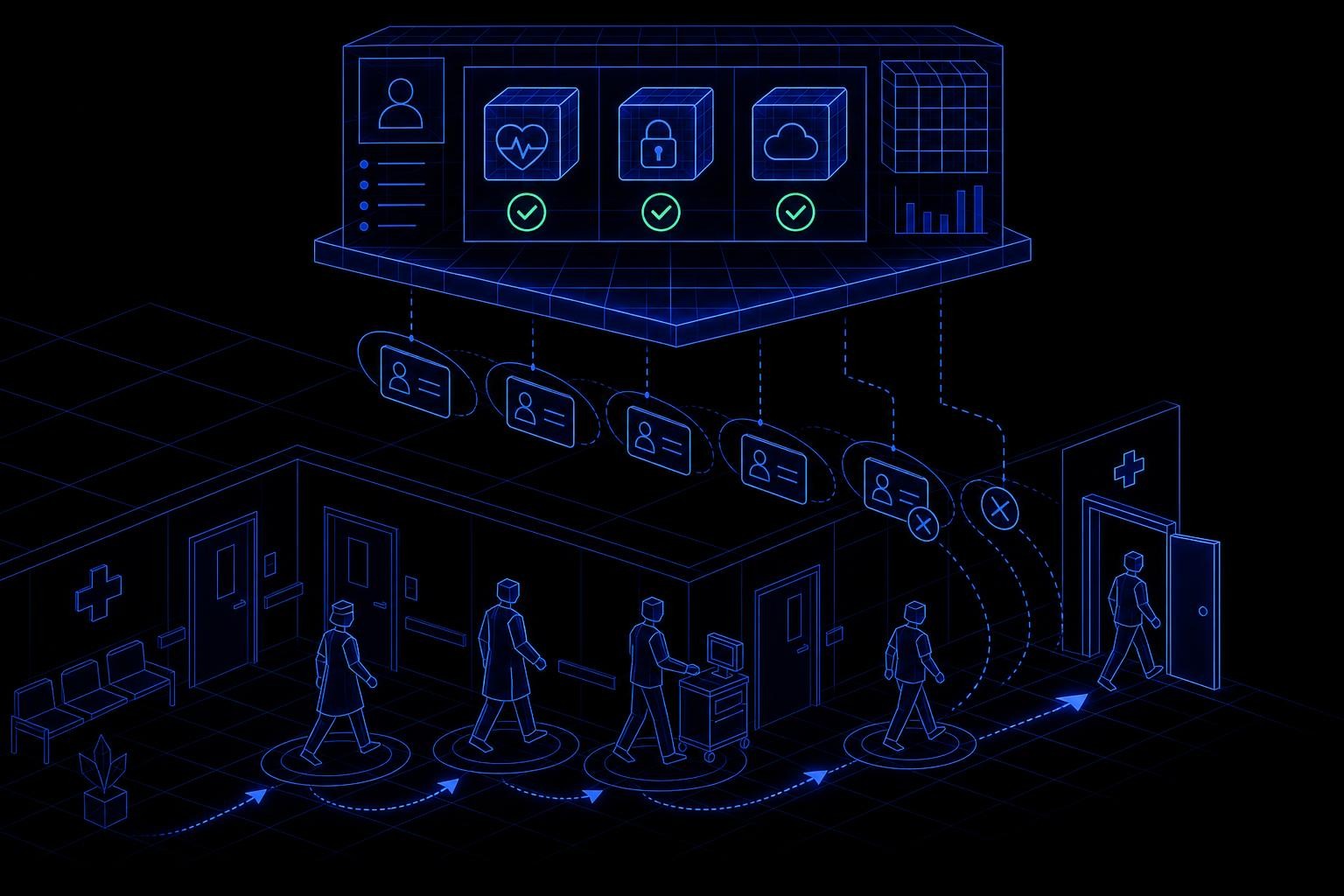
The Contractor and Clinician Coverage Problem
Contractors and traveling clinicians compound the problem further. They often access EHRs and clinical apps through non-standard paths - direct logins, shared credentials, or access granted outside the normal provisioning workflow. [11] notes that the joiner-mover-leaver lifecycle requires automating provisioning, role changes, and rapid deprovisioning - but that lifecycle only works if every app is in scope, including the ones without SCIM connectors or API integrations.
This is precisely where SSO-only and SCIM-only identity tools leave a dangerous gap. If your governance platform only covers the apps that support SCIM, you have a blind spot for every clinical tool, legacy system, and long-tail SaaS app that doesn't. An auditor asking for a complete access certification across all ePHI-touching systems will find that blind spot immediately.
A Practical Identity Readiness Plan
The proposed rule's compliance window - roughly 180 days after finalization - sounds like a lot of time. It isn't, for a multi-site health system or a business associate with a complex app stack. Here's how to sequence the work.
You cannot govern access to systems you haven't catalogued. Start with a complete inventory of every application, system, and cloud service that creates, receives, maintains, or transmits ePHI — including apps without SCIM or APIs. Map which users (workforce, contractors, vendors) have access to each. This inventory is the foundation for every other control: MFA coverage mapping, access reviews, and deprovisioning workflows.
For every system on your inventory, document whether MFA is currently enforced and what factor type is in use. Flag any reliance on SMS-based 2FA — the proposed rule aligns with NIST SP 800-63B AAL2, which excludes SMS. Prioritize remote access (VPN, ZTNA), EHR/EMR systems, cloud admin consoles, and any internet-facing application tied to ePHI.
The proposed one-hour termination requirement is operationally impossible to meet manually at scale. Automate deprovisioning triggers from your HRIS so that a termination event immediately kicks off access revocation across all connected systems — not just the SCIM-enabled ones. Include contractors and traveling staff, not just full-time employees.
Periodic access reviews need to become a continuous, documented process — not a quarterly spreadsheet exercise. Implement access certification campaigns that route to data owners and department heads, capture attestations, and auto-revoke access that isn't recertified. Every certification decision needs an immutable audit trail that an OCR investigator can pull on demand.
Apply least-privilege principles to all third-party accounts: time-limited access, MFA-protected, scoped to only the systems they need. Reconcile vendor access against active BAAs quarterly. For high-risk vendors with EHR or medical device access, implement heightened monitoring and more frequent access reviews.
The proposed rule shifts HIPAA from a principles-based framework to an evidence-based one. Every control needs documentation: MFA enrollment rates, access review completion records, deprovisioning timestamps, audit logs. Build your evidence library now so that when the compliance window opens, you're validating — not scrambling to create artifacts from scratch.
Where Iden Fits
The hardest part of HIPAA identity readiness isn't MFA on your EHR - your EHR vendor probably handles that. The hard part is everything else: the 40+ SaaS apps your clinical and administrative staff use daily, the contractor accounts provisioned outside the normal workflow, the legacy tools that don't support SCIM and therefore fall outside most governance platforms entirely.
Iden's universal connector technology covers apps whether they support SCIM, APIs, or neither - meaning your access inventory and certification campaigns extend to your entire stack, not just the well-behaved apps. Automated offboarding triggers from your HRIS fire across all connected systems simultaneously, making the one-hour termination requirement achievable rather than aspirational. And every provisioning decision, access review, and deprovisioning event is captured in an immutable audit log - the exact artifact an OCR investigator or external auditor will ask for.
For healthcare organizations navigating the intersection of high turnover and mandatory access controls, that coverage gap is the difference between a defensible compliance posture and a finding.
HIPAA 2026 Identity Readiness Checklist
Use this checklist to assess your current posture against the proposed rule's identity controls. It's also the artifact list an auditor will work through.
The Bottom Line
The proposed HIPAA Security Rule overhaul is the most consequential identity compliance event in healthcare in two decades. The "addressable" era is ending. When the final rule publishes - and the 180-day clock starts - organizations that have already built continuous access governance, automated offboarding, and a complete identity inventory will spend that window validating. Everyone else will be building from scratch under deadline pressure.
The identity controls the proposed rule mandates aren't novel security ideas. They're what a well-run identity program already does. The question is whether your current tooling covers your entire app stack - or just the easy half of it.
For more context on the regulatory backdrop, see our posts on The Biggest HIPAA Security Rule Shake-Up in Years and Navigating HIPAA & GDPR.
Is the 2026 HIPAA Security Rule final?
No. As of June 2026, OCR has not published a final rule. The NPRM was published January 6, 2025, and the comment period closed March 7, 2025. OCR's regulatory agenda had targeted a May 2026 finalization, but that window has passed with no final rule issued. The proposed requirements and their timing could still change, be delayed, or be withdrawn. Organizations should prepare against the proposed controls — which represent security best practices regardless — but implement formally once the final text is published.
What does the proposed rule mean for MFA specifically?
The proposed rule would make MFA mandatory for all interactive access to ePHI — including EHR/EMR systems, VPNs, cloud admin consoles, and third-party vendor access. It eliminates the current 'addressable' flexibility that allowed organizations to document an alternative approach. The proposed rule also aligns with NIST SP 800-63B AAL2, which excludes SMS-based 2FA as an acceptable factor.
What is the proposed compliance window after the final rule publishes?
The proposed rule includes a 240-day total window: 60 days until the rule takes effect, then 180 days until compliance is mandatory. Business Associate Agreements must be updated within one year of the effective date. The exact window will be confirmed in the final rule text.
Why is healthcare staff turnover a HIPAA identity risk?
High turnover — hospital rates around 18.3% annually, home-care rates near 79.2% — means a constant churn of accounts that need to be provisioned and deprovisioned. The proposed rule includes a one-hour workforce access termination requirement, which is operationally impossible to meet manually across a complex app stack. Orphaned accounts from departed staff represent both a security risk and a compliance finding.
Does the proposed rule apply to business associates?
Yes. The proposed mandatory provisions apply to business associates just as they do to covered entities. Covered entities will increasingly expect their BAs to demonstrate compliance, making a strong identity governance posture a competitive differentiator for BAs operating in the healthcare space.
What identity artifacts will an OCR auditor ask for?
Expect requests for: a complete technology asset inventory showing all ePHI-touching systems; MFA enrollment and coverage reports by system and user population; access certification records with attestation timestamps; deprovisioning logs showing time-from-termination to access revocation; audit logs capturing ePHI access events; and updated BAAs. Every artifact needs to be producible on demand, not reconstructed after the fact.
- medcurity.com — Hipaa security rule 2026 update
- cbiz.com — 5 hipaa security rule changes in 2026 and how to prepare
- zengrc.com — Hipaa security rule update is about to change everything
- censinet.com — Hipaa compliance mfa requirements cloud phi
- petronellatech.com — Hipaa security rule 2026 update what covered entities must do by q3
- cyera.com — New hipaa rules mandate mfa and encryption for ephi is your organization ready
- elisity.com — Hipaa security rule 2026 240 days
- kodiaksolutions.io — Preparing for the 2026 hipaa security rule overhaul
- rellevate.com — Healthcare turnover rates
- censinet.com — Hipaa access control requirements explained
- accountablehq.com — Hipaa access management policy template requirements and best practices
Related reading
Secrets Management vs. NHI Governance: Where Vaults Stop and Identity Begins
A vault secures the secret - it doesn't govern the identity holding it. Here's the gap between secrets management and NHI governance, and why you need both layers in 2026.
Honest Guide to Okta Alternatives for Identity Governance
Okta is best-in-class SSO. But when governance depth, non-SCIM coverage, or cost at scale become the problem, here's an honest look at what to consider instead.
The Honest IAM Buyer's Guide: Best Tools by Category in 2026
A trade-off-first guide to IAM tools in 2026 - SSO, IGA, PAM, CIAM, and directories explained, with honest best-fit profiles for Okta, Entra ID, SailPoint, CyberArk, Lumos, Iden, and more.